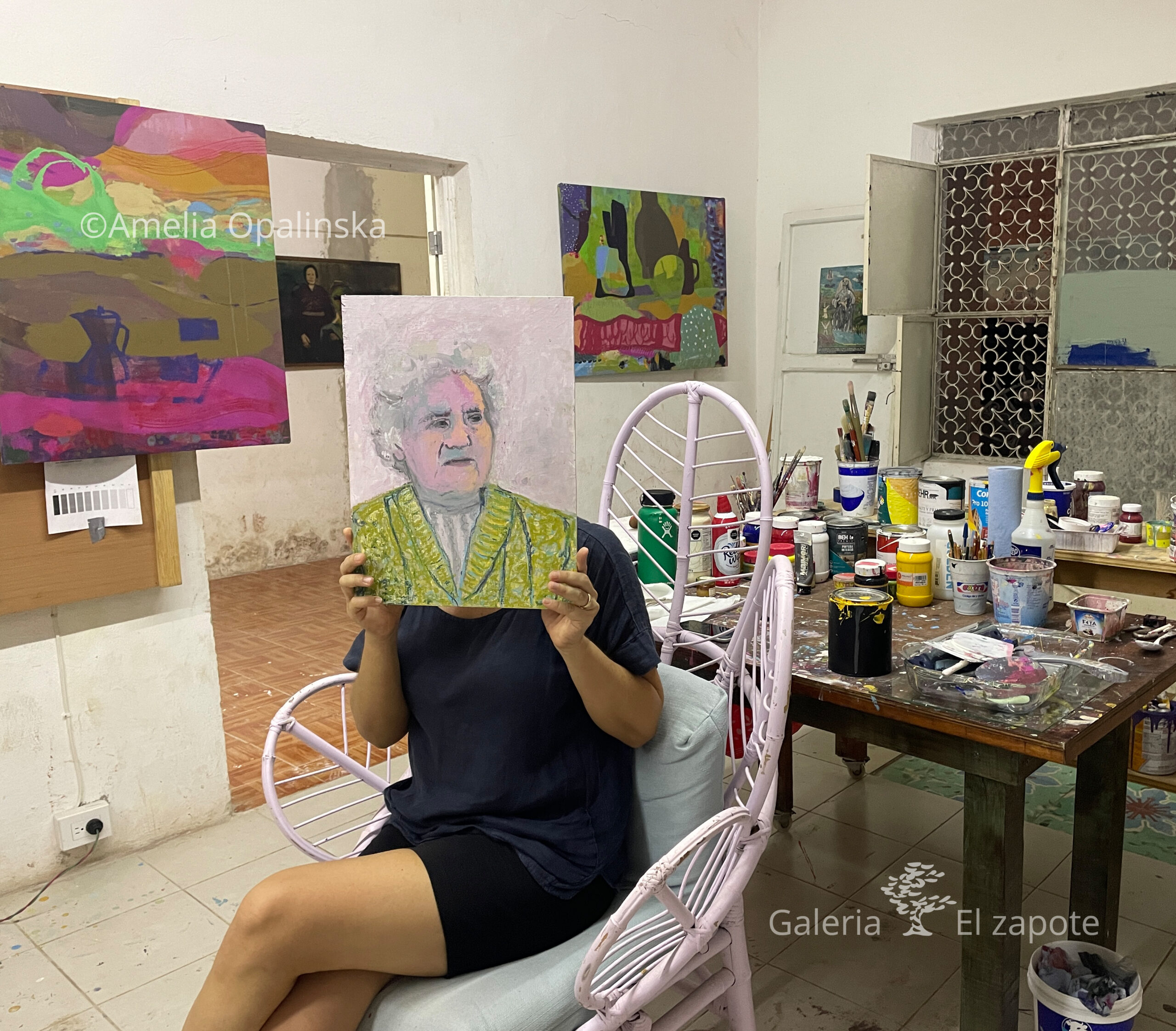
Amelia Opalinska is a Polish-born artist whose intuitive and expressive work merges color, gesture, and memory. Born and raised in Rzeszów, in southeastern Poland, she trained in photography — holding a B.F.A. and exhibiting in group shows at SITE Santa Fe and The Gerald Peters Gallery — before setting off on years of travel through Europe, the Middle East, and Latin America as a documentary photographer. Her images from Syria appeared in Publio magazine, and an intimate series on her own childhood was published by PULSE Media.
In 2013 she settled in Mérida, Yucatán, turning more fully toward painting — a practice that has continued to expand over more than a decade of life in the peninsula, alongside her ongoing work in photography and writing.
Background and Artistic Focus in Yucatán
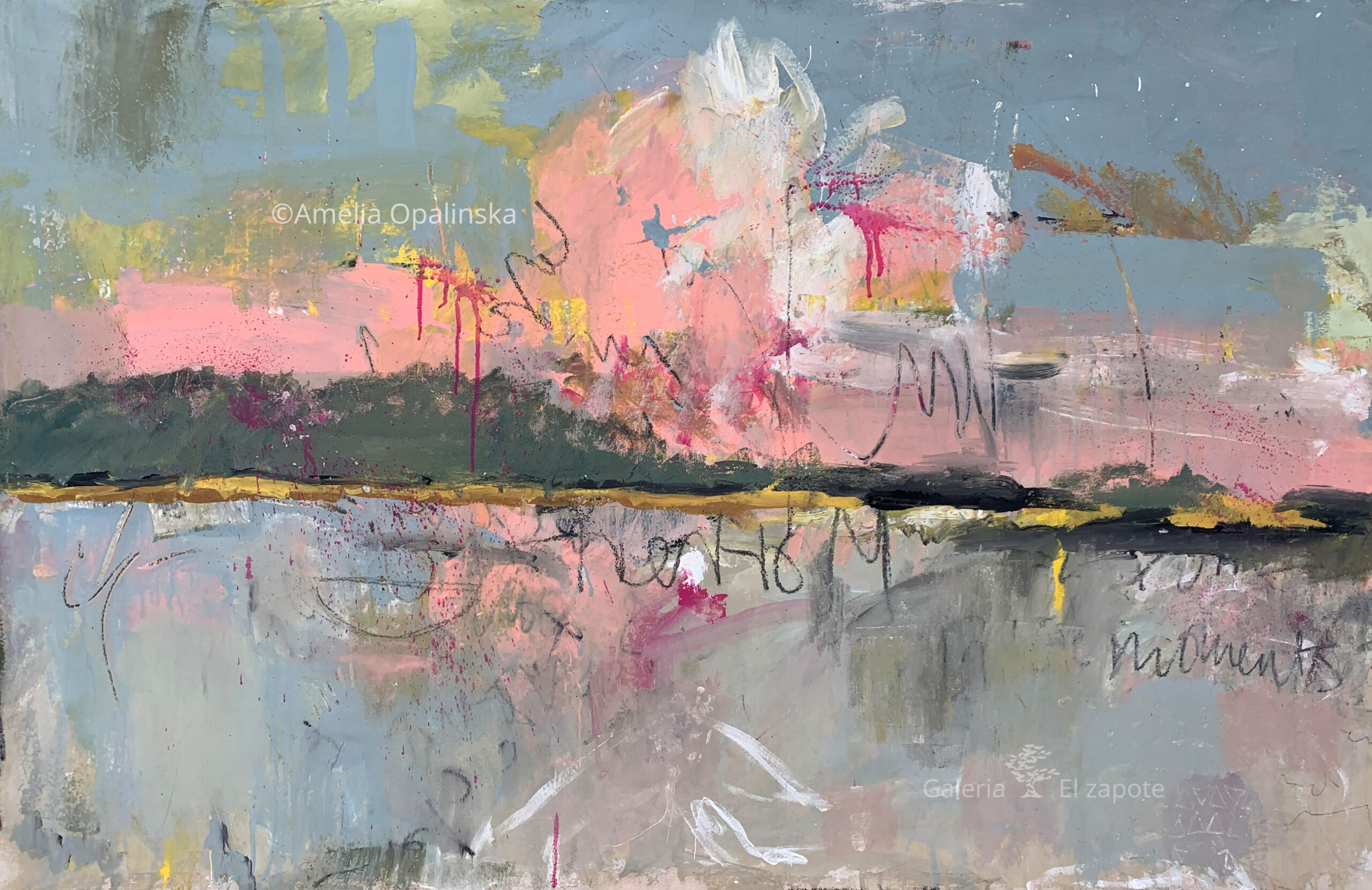
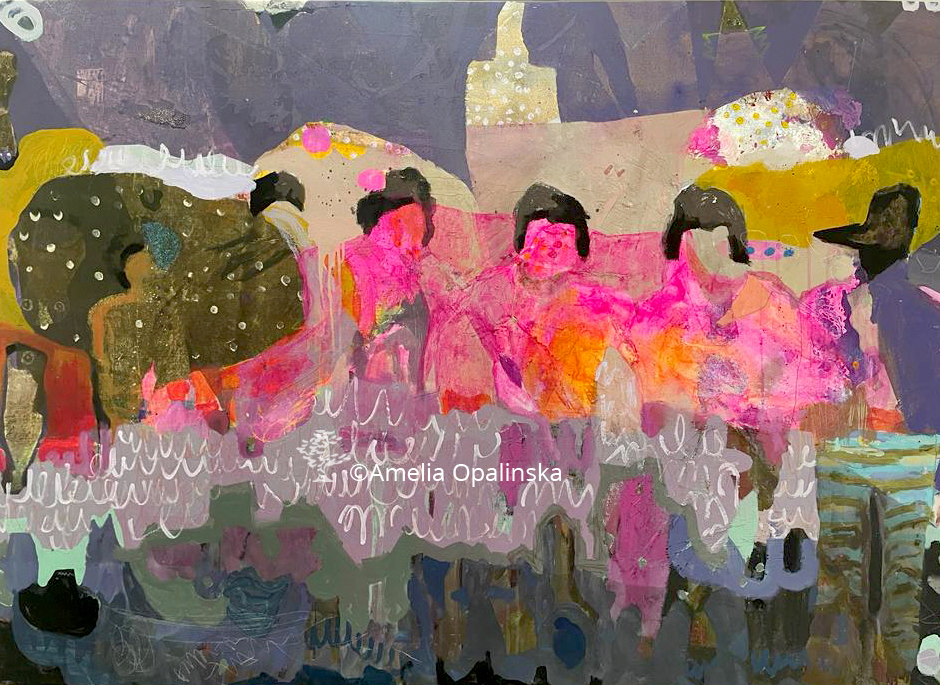
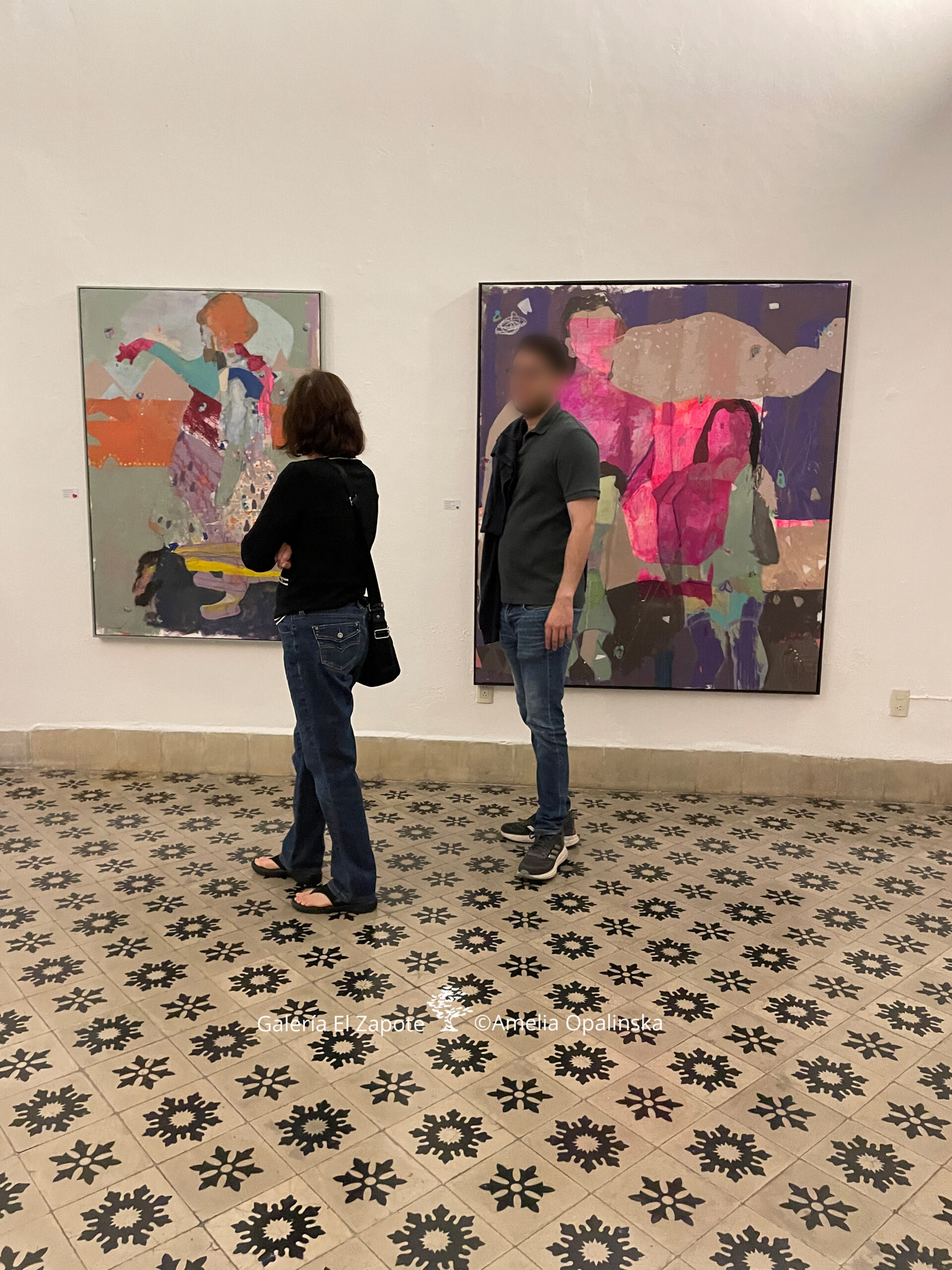
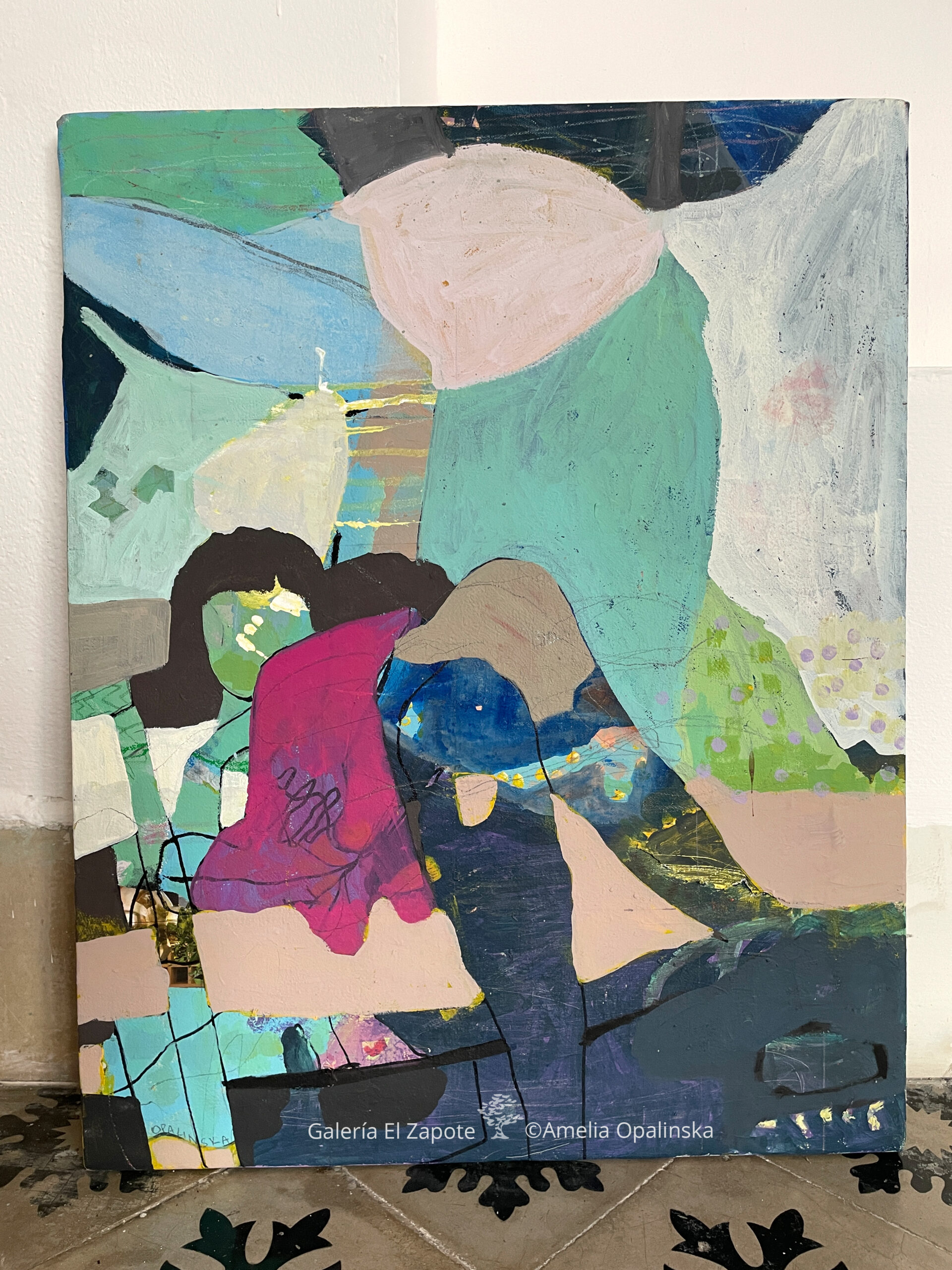
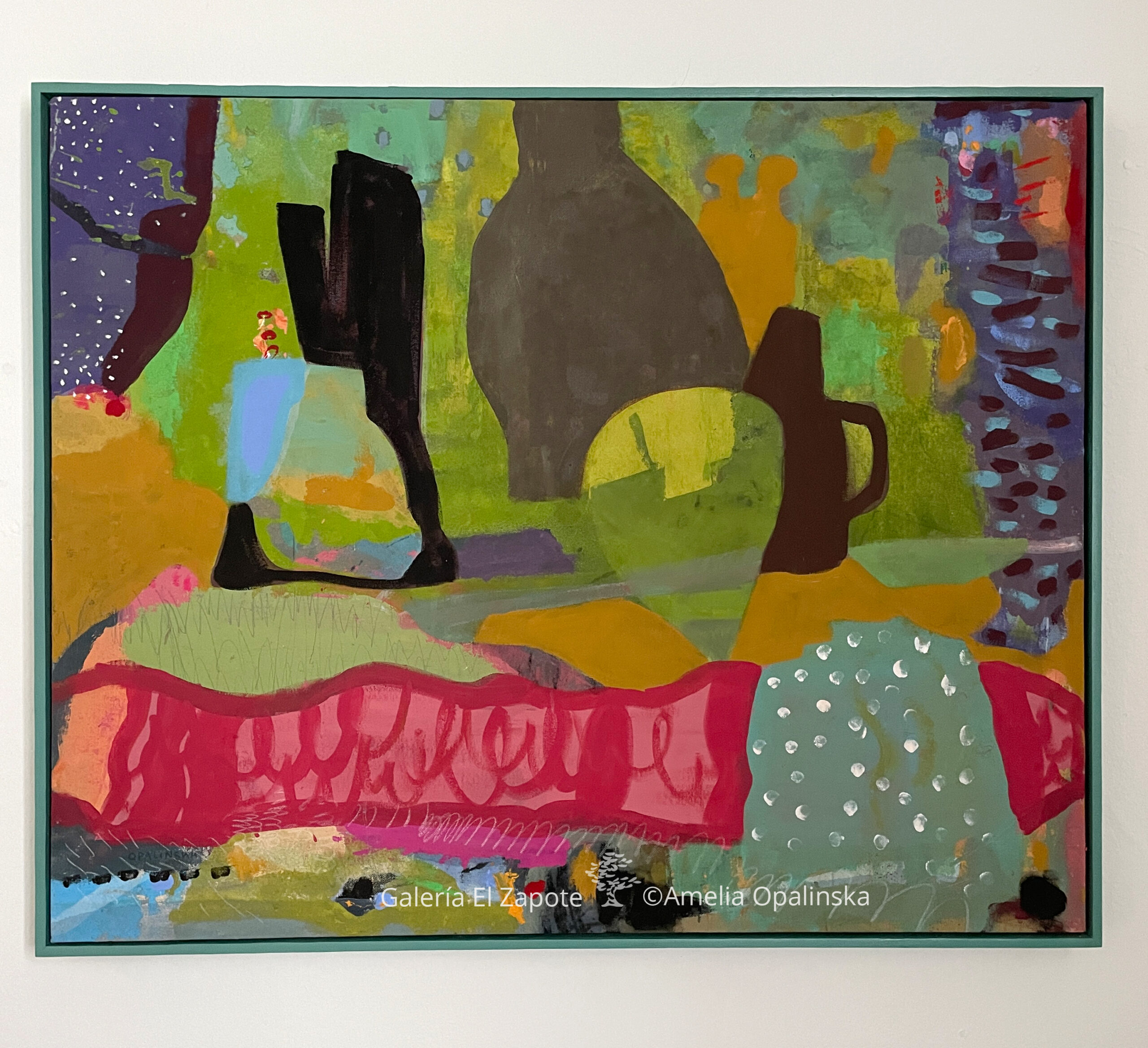
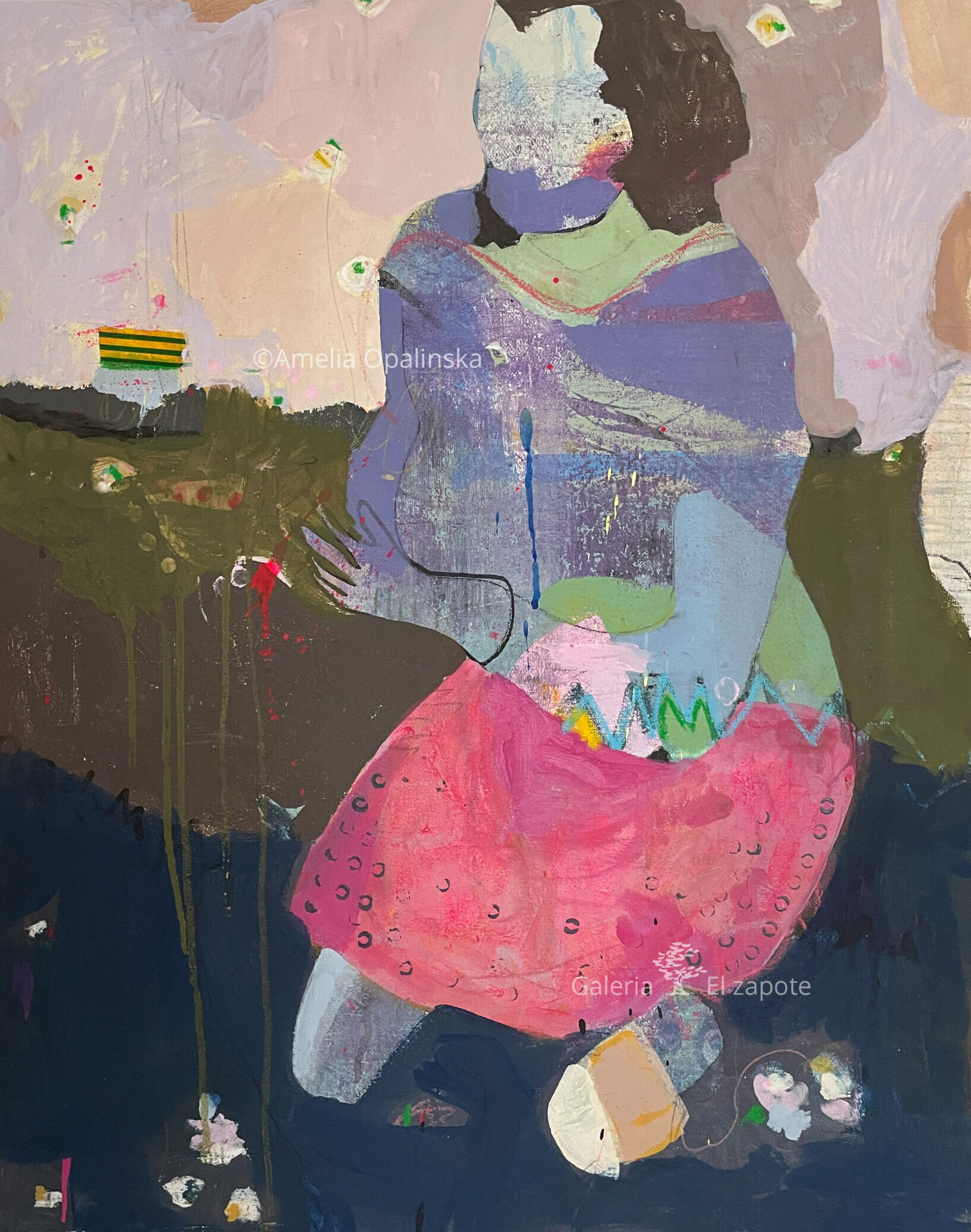
Opalinska describes her aim as reaching for something universal and elemental beneath the surface of experience — stripped of expectation and formula, closer to a child’s unguarded curiosity than to technical rule. That search shows up directly in her visual language: stippled texture and loose, childlike mark-making; solid blocks of color set against passages of transparency; bright, saturated tones held in tension with earthier, opaque ones within a single composition. She tests color, form, and gesture without deferring to the rules of complementary or opposite hues, applying that same freedom to perspective, scale, and the human figure. Across a large and varied body of work, she often limits her own palette by choice, using that constraint to push further into new ways of representing lived experience.
Trapitos al Sol: A Turning Point
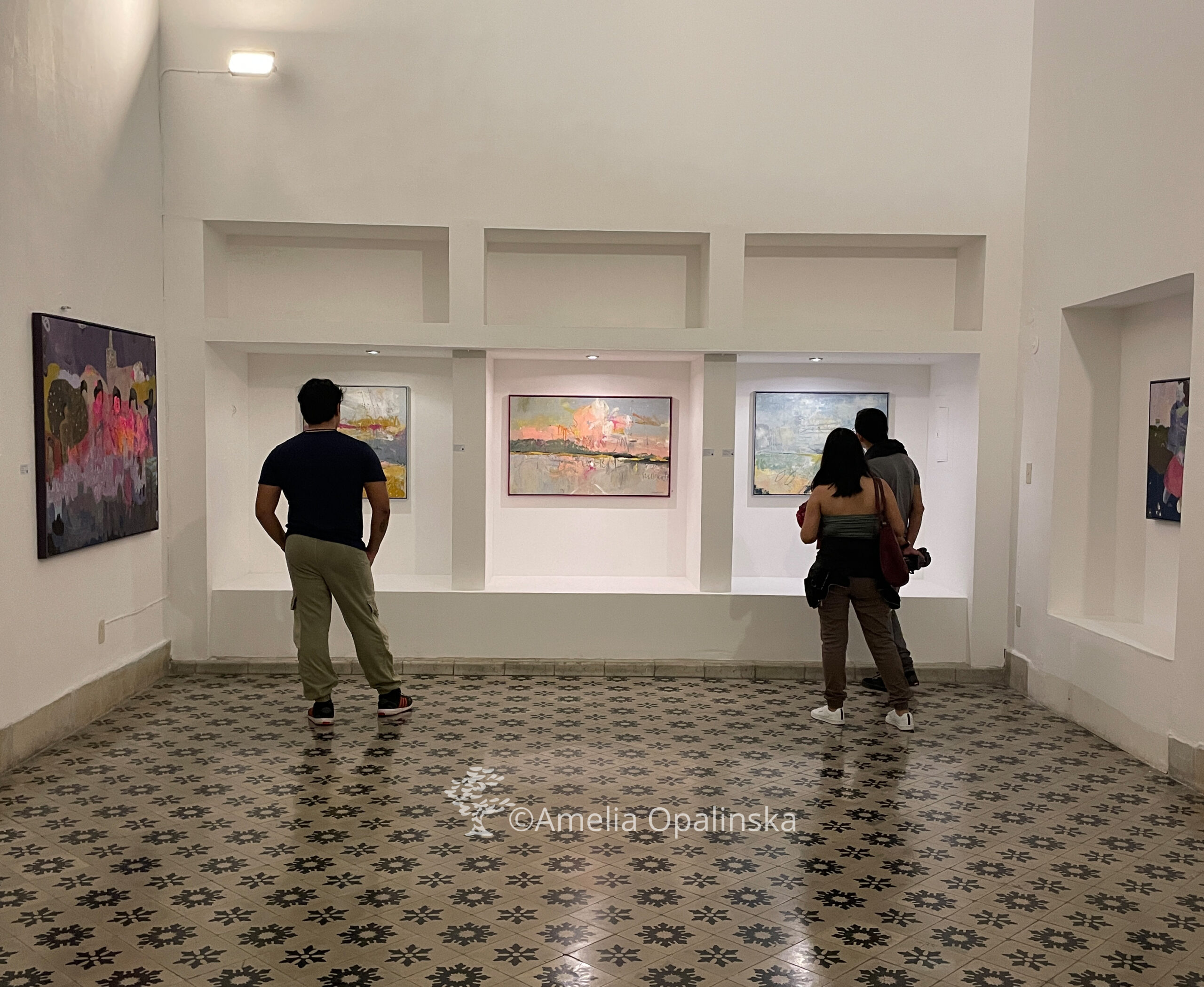
Her 2023 solo exhibition Trapitos al Sol at El Zapote Gallery marked a significant moment in her career. Drawn from a larger body of nearly fifty works, the exhibition brought together figurative paintings across the themes of everyday life, landscape, and still life, selected for how strongly they connected with audiences. Despite the range of subjects, the paintings shared a common visual language, carried through in bold, saturated tones and high contrast that heightened the visual impact of the show. The title — colloquially meaning “airing out one’s laundry” — reflected the confessional tone of the work, rooted in her life in Yucatán, and established a clear direction for her evolving visual language.
Assemblage and Installation Practice
In recent years, Opalinska has expanded her practice to include assemblage and installation. In her 2024 exhibition Eyes, Needles, and Fireflies. The Story of Things, she arranged found objects into poetic compositions, extending the same exploratory visual language of her paintings into three dimensions — privileging open-ended association over formal structure, and blurring the line between image and object.
Magic Lurks in Color and Recent Work
Her 2025 solo show Magic Lurks in Color traces a rhythm the artist has come to know well through years of living in the tropical climate of the Yucatán peninsula: stretches of vitality and motion giving way, without warning, to stillness — and stillness, in turn, opening into work. “The brush moves by forces unseen,” she has written of these paintings, “no longer plotting nor demanding.” The resulting images, formally diverse, combine blocks of color, abstracted figures, and expressive mark-making, each one marked by its own hue, shape, and saturation.
To Stay a Little Longer — Her Fourth Exhibition at El Zapote
In February 2026, in her fourth exhibition at El Zapote Gallery, Amelia Opalinska presents To Stay a Little Longer, a series of 21 paintings that grew out of a September journey through the Sierra Tarahumara in Chihuahua, made by train and by road. Wildflowers opened across the land; rain filled the buckets and swelled the river outside a window in Cerocahui; among the tall pines and quiet cabins of Creel, the days slowed enough to be felt. Unlike the wide-ranging body of work behind Trapitos al Sol, this series holds a tight, uniform consistency of palette, tone, and visual language from piece to piece, marking it as a single, unfolding narrative rather than a survey of themes.
Opalinska resisted the urge to fix or possess the landscape photographically, letting attention itself become the subject. Meadows transformed, in the resulting paintings, from sites of abundance into spaces of rest; shelter appears not as structure but as permission to pause. Through blocks of color and loose brushwork, the works suggest landscape elements — trees, animals, bodies of water, the movement of traditional Rarámuri textiles — without being tethered to realistic scale or form, capturing the moment when external observation gives way to internal sensation.